
What To Look for When Renting Truck Parking Near Winter Haven, FL
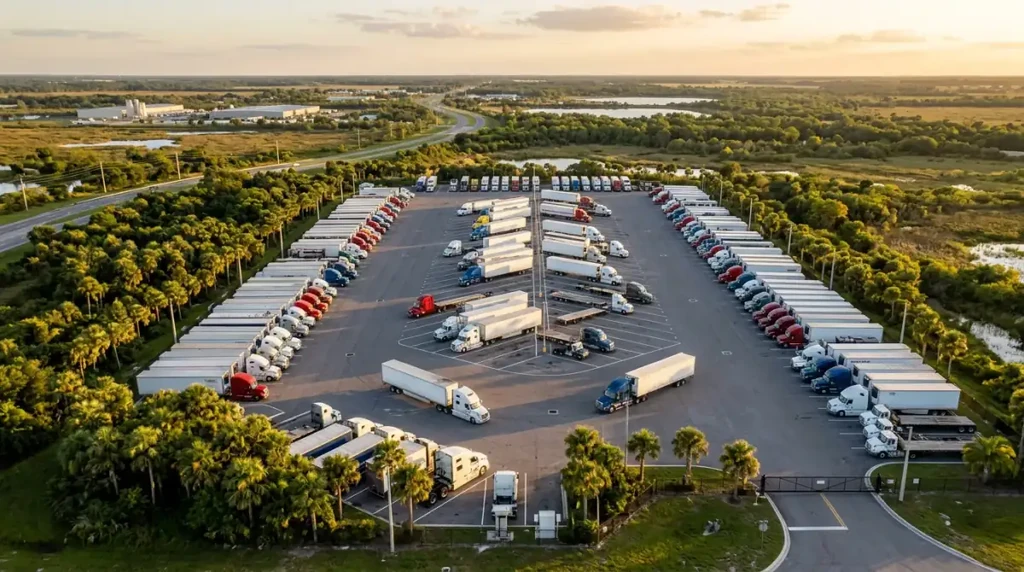
A travel trailer that sits in a residential driveway from October through April takes UV damage, gets beaten up by Florida's afternoon downpours, and tends to draw attention from homeowners association boards that prohibit oversized vehicles on the property. Renting a dedicated parking space at a storage facility solves all of that at once, but not every lot is set up the same way. Here is what to actually evaluate before you sign a month-to-month agreement near Winter Haven.
Covered, Enclosed, and Open Parking: Know the Difference
The most important decision is the storage type itself. Open parking is the most affordable option and works well for road-ready vehicles that can handle outdoor exposure between trips. Covered parking adds a roof overhead, reducing direct sun on your finish and keeping rain off the cab or deck. Enclosed indoor storage surrounds the vehicle on all sides, making it the right choice for classic cars, motorcycles, or anything with a finish or interior you want to keep in top condition through the offseason.
For boats, travel trailers, fifth-wheels, and motor homes, covered parking often strikes the right balance between cost and protection. For a Jet Ski or ATV you pull out every few weeks, an open parking space with easy drive-in access often makes more sense. Knowing which category your vehicle falls into before you shop will quickly narrow your options. Our boat and RV storage options cover all three types, so you can match the space to what you’re actually storing.
Space Size and Pull-Through Access
A parking space that is too short for your rig creates real problems on move-in day. Before you reserve anything, measure your vehicle's total length including any tow hitch, tongue, or motor that extends beyond the main body. Fifth-wheels and motor homes often run longer than owners expect once you account for every overhang.
Pull-through spaces, where you can drive in one end and exit the other, are worth prioritizing for larger rigs. Backing a 35-foot trailer into a tight stall every time you retrieve it adds unnecessary wear on the vehicle and your patience. Ask specifically whether the storage facility offers pull-through lanes before you commit.
.webp)
Homeowners-Association-Friendly Storage for Polk County Residents
Residential neighborhoods throughout the Winter Haven area commonly restrict where owners can park boats, RVs, and commercial trucks. Some homeowners associations prohibit them from driveways entirely, and others allow a short window for loading and unloading but not long-term parking. Renting a space at a nearby facility keeps the vehicle off your property, keeps you in compliance, and frees up your driveway for everyday use.
Century Storage has two locations in Winter Haven that serve residents across the surrounding communities. You can browse both at our Winter Haven storage locations page, or explore our full network through the Century Storage locations hub if you need a facility closer to another part of Central Florida.
Seasonal In-and-Out Flexibility
Recreational vehicles earn their keep during a concentrated stretch of the year. A fishing boat might go out from March through November. A ski boat sees heavy use in summer. A motorcycle gets ridden on weekends from fall through spring. Month-to-month leases are the practical choice for this kind of use because you aren't locked into paying for a space during the months the vehicle sits in your garage anyway.
Before you rent, confirm that the facility offers month-to-month terms and that retrieval is straightforward when you’re ready for a trip. For more guidance on keeping your vehicle in good shape between seasons, our post on long-term RV storage tips covers the prep steps worth taking before you park it for an extended stretch.
Finding the right parking space near Winter Haven comes down to matching the storage type to your vehicle, confirming your rig's dimensions, and choosing a facility that offers the lease flexibility your schedule requires. Work through those factors in order, and the decision becomes straightforward.
Explore the unit size guide to learn more.